news
How Tasmania's Public Image Archive Ended Up Full of Duplicates, and What It Will Take to Fix It
A slow accumulation of poorly managed digital assets across state agencies has left Tasmania's official visual record cluttered, inconsistent, and increasingly expensive to maintain.
How we reported this
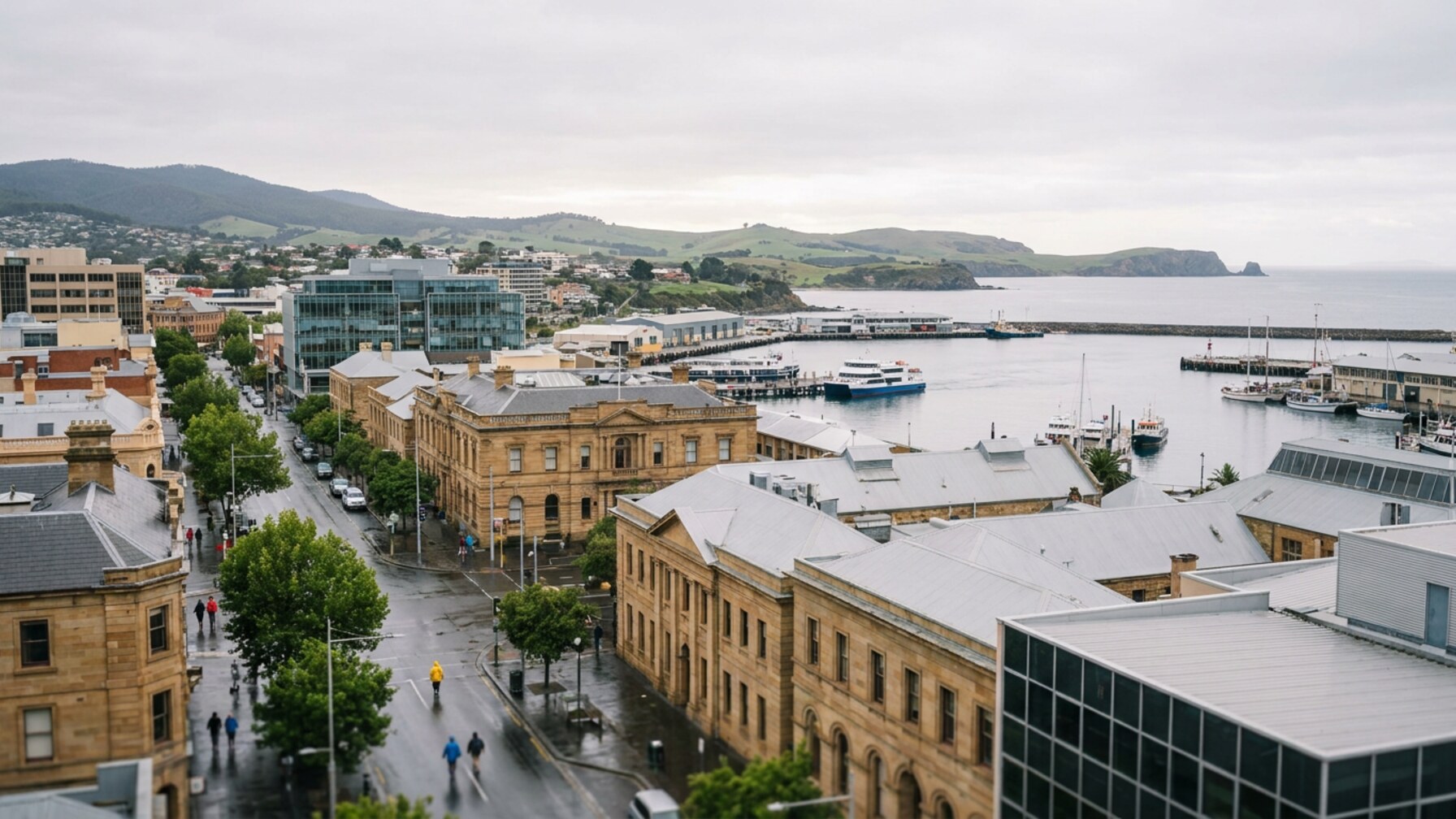
Tasmania's state government holds tens of thousands of digital images across at least a dozen separate agency repositories, and a significant portion of them are duplicates. The problem did not emerge overnight. It is the product of more than a decade of fragmented procurement decisions, agency-by-agency IT rollouts, and no single overarching digital asset management policy binding departments together.
The issue matters now because the Liberal government's current infrastructure push, covering Marinus Link communications collateral, the AFL stadium project at Macquarie Point in Hobart, and a wave of tourism investment in the state's north and northwest, is generating fresh visual content at a rate that is making the underlying disorder worse, not better. Agencies commissioning photography for major projects have repeatedly found themselves paying for images already held elsewhere in government, simply because no shared catalogue existed to tell them otherwise.
A System Built in Silos
The architecture of the problem traces back to roughly 2012, when individual state agencies began independently adopting digital asset management tools without coordination from the Department of Premier and Cabinet. Tasmania Parks and Wildlife Service, which manages assets including Cradle Mountain and the Freycinet Peninsula, built its own library. Tourism Tasmania, headquartered on Murray Street in Hobart, developed a separate one. Destination Southern Tasmania, Infrastructure Tasmania, and the State Library of Tasmania on Murray Street each ended up with their own storage arrangements.
By the time the Tasmanian Digital Strategy 2023-2028 was published, the duplication problem was embedded deeply enough that no simple migration could solve it. The strategy acknowledged the need for better data governance across agencies, but image asset consolidation was not listed as a funded priority in the initial implementation schedule.
The practical consequence is visible to anyone who has tried to access a photograph of, say, Salamanca Place or the Mona precinct in Berriedale for an official government publication. The same image, or near-identical variants shot on the same day, can exist in three or four separate agency folders, each licensed separately, each maintained separately, and each consuming server storage budgets that are ultimately drawn from the same public funds.
What Replacement Actually Involves
Replacing duplicate images in a government context is not as straightforward as deleting files. Each image in an agency repository is typically tied to metadata, rights licensing records, publication histories, and audit trails required under the Archives Act 1983. Removing or consolidating files requires confirming that no active publication, website, or legal record depends on a specific file path or asset identifier. That is archival work, and it takes time.
The State Library of Tasmania has been working through its own digitised collection rationalisation since 2024, a process that librarians there have described publicly as resource-intensive even with dedicated staff. The challenge for operational agencies, Tourism Tasmania, Infrastructure Tasmania, and others, is that they lack the archival expertise to conduct the same kind of systematic review without external support.
A government-wide digital asset consolidation project, if funded and scoped properly, would realistically take two to three years to complete given the volume involved. Similar programs in other Australian jurisdictions have cost anywhere from $800,000 to well over $2 million depending on the number of repositories and the legacy systems involved. No equivalent project has been publicly announced or budgeted in Tasmania as of July 2026.
For now, agencies commissioning new photography for projects like the Macquarie Point stadium redevelopment or Marinus Link public engagement campaigns are being advised informally to check with counterparts before contracting photographers, a workaround, not a solution. The Department of Premier and Cabinet has flagged digital governance reform in its forward work program, but a timetable and funding envelope for image archive rationalisation specifically have not been confirmed publicly. Until they are, the duplicate problem will keep growing, one commission at a time.