news
How Tasmania's Public Image Archive Ended Up Riddled With Duplicates, and What Comes Next
A decade of rushed digitisation, siloed government departments and inconsistent cataloguing standards left the state's official visual record in a mess that administrators are only now beginning to untangle.
How we reported this
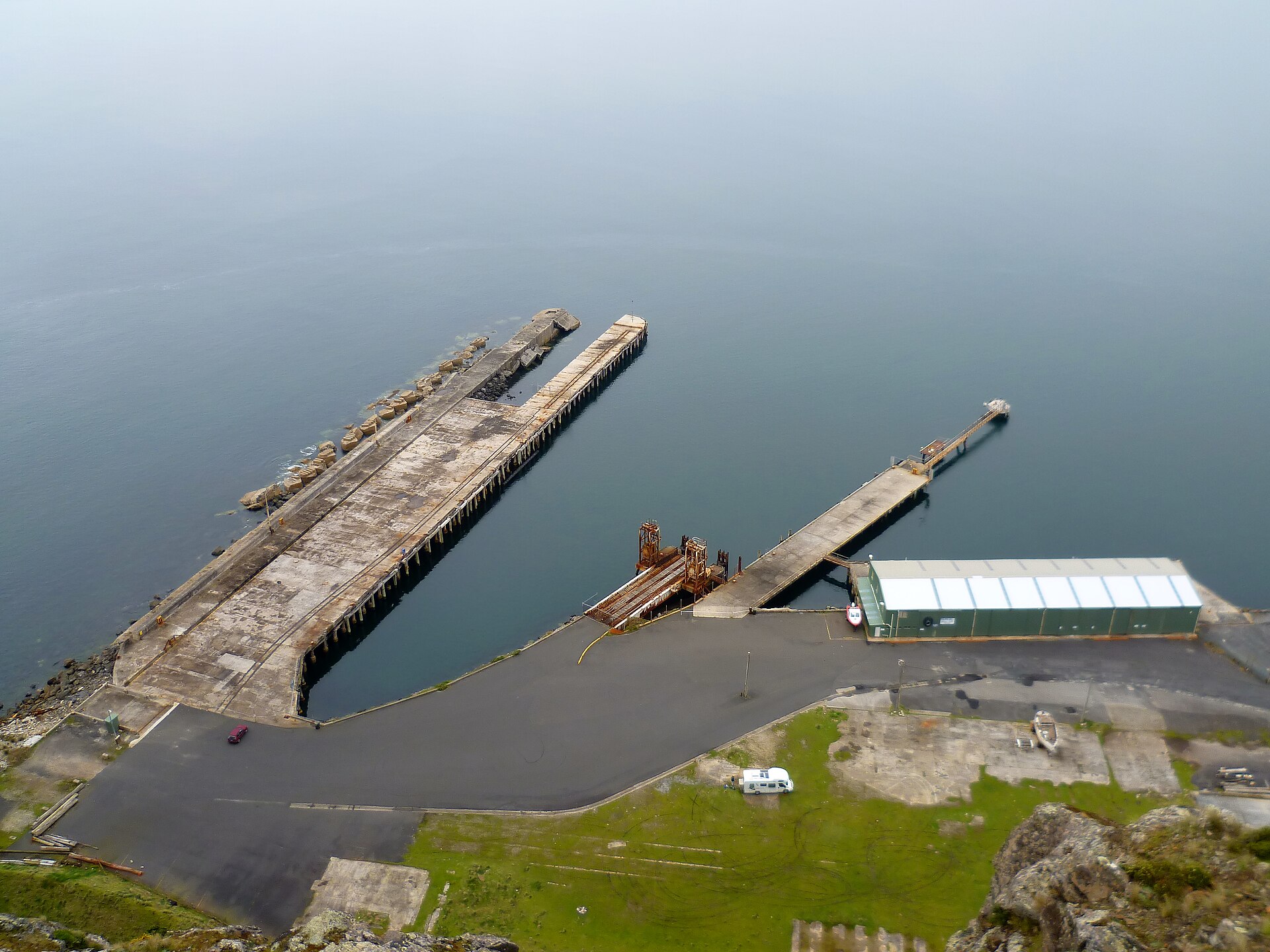
Tasmania's state government holds tens of thousands of digital images across at least six separate agencies, and a significant portion of that archive contains duplicate or near-duplicate files that have been silently accumulating since a major digitisation push began around 2015. The Libraries Tasmania repository on Murray Street in Hobart alone flagged the problem internally as far back as 2021, when routine storage audits began turning up the same heritage photographs catalogued under different accession numbers across multiple collections.
The issue matters right now because two forces have converged. First, the Tasmanian Heritage Council is midway through a broader project to consolidate state records ahead of new digital-preservation standards taking effect under the Australian Government's National Framework for Digital Cultural Heritage later this year. Second, a wave of infrastructure investment, the AFL stadium on Macquarie Point, the Marinus Link cable route documentation, expanded tourism infrastructure around the Freycinet Peninsula, has generated thousands of new official images that agencies are scrambling to file without repeating old mistakes.
How the Duplication Problem Grew
The roots go back to a funding announcement in the 2015-16 state budget, which allocated money for agencies to digitise physical holdings independently. There was no shared taxonomy, no centralised metadata standard, and no interoperability requirement between the systems that Parks and Wildlife Service, the Tasmanian Museum and Art Gallery on Dunn Place, and Heritage Tasmania each chose to adopt. A photograph of Wineglass Bay, for instance, might exist as a TIFF in one system, a compressed JPEG in another, and a web-resolution copy in a third, each catalogued under a slightly different filename with no machine-readable link between them.
By the time Libraries Tasmania conducted a formal storage review in 2022, the duplication rate across sampled collections was estimated internally at somewhere between 18 and 23 per cent of total image holdings, according to background documentation circulated to sector stakeholders. That range, while not a final audited figure, was enough to prompt the Libraries Tasmania board to commission a full deduplication scoping study, delivered in mid-2023. That study has not been publicly released in full.
Salmon aquaculture regulation added its own wrinkle. Environmental monitoring programs in the Huon Valley and the D'Entrecasteaux Channel required regular photographic evidence submissions from operators, and those images flowed into at least two separate government repositories, Environment Tasmania and the Marine and Safety Tasmania database, without a shared identifier. The result: duplicate compliance images that complicated audit trails and, at least in one reported case, led to version-control confusion during a 2024 regulatory review.
The Path to a Fix
Libraries Tasmania announced in March 2026 that it would pilot a deduplication protocol across three collections, the John Watt Beattie photographic archive, the State Library's colonial-era map holdings, and the Parks and Wildlife image library, using perceptual hashing software that can identify near-identical images even when file formats or resolutions differ. The pilot is scheduled to conclude by September 2026.
For community organisations and researchers who access state images through the Tasmanian Names Index or the LINC Tasmania portal, the practical advice is straightforward: before using any image sourced from those platforms in a publication or heritage submission, cross-check the accession number against the Libraries Tasmania online catalogue directly. Duplicate records sometimes carry conflicting metadata about copyright status, provenance or the date of the original photograph, discrepancies that can create real problems downstream for councils, architects and historians working on development applications in heritage-listed suburbs like Battery Point or North Hobart.
The September pilot deadline gives administrators a narrow window before the summer tourism season ramps up demand on the state's digital collections. Whether the deduplication framework gets rolled out system-wide after the pilot, or remains confined to the three test collections, will depend on the 2026-27 state budget allocation, a figure that has not yet been confirmed publicly by the Department of Natural Resources and Environment Tasmania.