news
How Tasmania's Public Image Archive Ended Up Full of Duplicates, and What It's Costing Us
Years of siloed government departments, rapid digitisation programs and a chronic lack of shared standards left the state's official image libraries bloated, inconsistent and increasingly expensive to maintain.
How we reported this
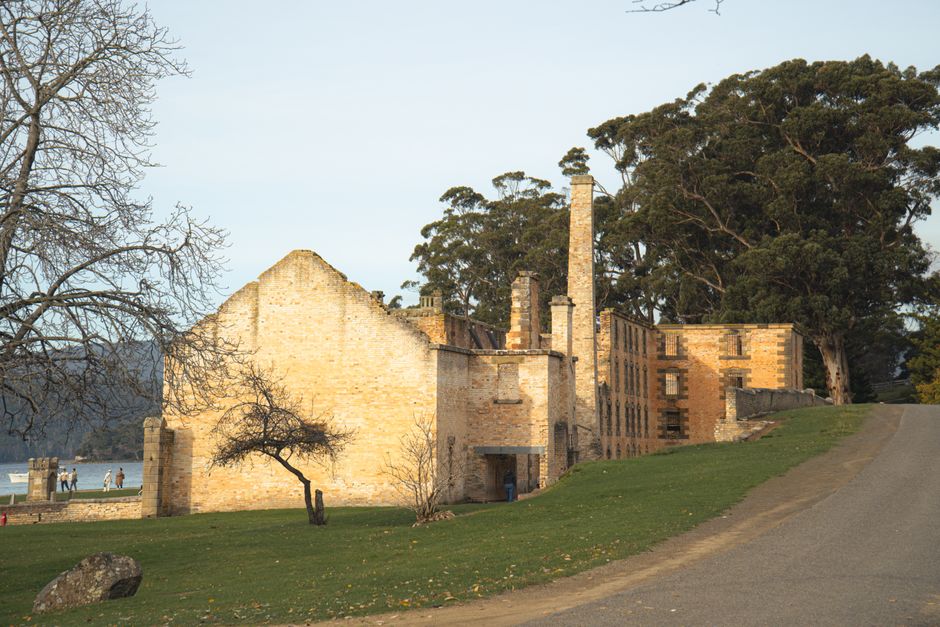
Tasmania's state government is sitting on tens of thousands of duplicate digital images spread across at least a dozen agency repositories, a problem that has quietly ballooned since the early 2010s and is now forcing a reckoning over storage costs, licensing compliance and public accountability.
The issue matters right now because the Rockliff Liberal government has committed to a broader digital asset management overhaul as part of its Service Tasmania modernisation agenda, with the Department of Premier and Cabinet flagging consolidation work across agencies including the Tourism Tasmania library, the Department of Natural Resources and Environment Tasmania, and the Office of the Coordinator-General. Duplicate imagery isn't a trivial housekeeping problem, it is, at its core, a governance failure that compounds every other data quality challenge the state is trying to fix.
How the Backlog Built Up
The roots go back to roughly 2012, when individual Tasmanian agencies began digitising their photographic archives independently. Tourism Tasmania, based on Elizabeth Street in Hobart's CBD, built its own asset library to support campaigns promoting the Freycinet Peninsula, Cradle Mountain and the Huon Valley. The Department of State Growth, responsible for infrastructure projects including the Marinus Link corridor planning, maintained a separate system for project documentation photography. Parks and Wildlife Tasmania, operating across more than 50 per cent of the state's land area under reserved status, had its own third system entirely.
Nobody was talking to each other. A drone photograph of Macquarie Harbour taken for a regulatory submission relating to salmon aquaculture might end up stored under three different filenames across three different servers, one in Hobart, one archived at the Rosny Park government offices across the Derwent, and a third uploaded to a cloud backup that an agency had contracted separately. Multiply that across years of fieldwork, ministerial visits, infrastructure announcements and tourism shoots, and the duplication compounds fast.
The AFL stadium project at Macquarie Point accelerated the problem. From 2023 onward, multiple agencies, including Infrastructure Tasmania, the Macquarie Point Development Corporation and the Department of Treasury and Finance, were all commissioning and circulating site photography. Project cost blowouts drew heightened public and media scrutiny, and agencies responded by producing more documentation images, rarely checking whether equivalent shots already existed in another department's holdings.
What Duplication Actually Costs
Cloud storage is not free. The Australian Government's whole-of-government pricing benchmarks published in 2024 put managed cloud object storage at roughly $23 to $38 per terabyte per month for enterprise-grade solutions. A single high-resolution image file from a professional shoot can run to 80 megabytes or more; a library of 200,000 duplicated files at that size represents around 16 terabytes of redundant data, potentially costing agencies several hundred dollars a month just in storage overhead, before accounting for staff time spent searching across systems or re-licensing images that the state already held rights to.
Licensing is the sharper edge of the issue. When a communications officer at a Launceston regional office can't locate an approved image in their agency's system, they often commission a new shoot or, worse, pull an image from an unapproved source. The Tasmanian Audit Office noted in its 2023-24 digital governance review that inconsistent asset management practices remained a recurring finding across multiple agencies, though it stopped short of attaching a dollar figure to the problem.
The path forward under the current modernisation push involves establishing a single whole-of-government digital asset management platform, with the Department of Premier and Cabinet understood to be in procurement assessment. Any centralised system will need to handle deduplication at ingestion, identifying near-identical images through hash-matching or perceptual comparison algorithms before they enter the archive, and will require agreed metadata standards so that a photograph of Lake Pedder filed by one agency can be found by another.
For Tasmanians, the practical stakes are straightforward. Better image management means fewer taxpayer dollars spent on redundant storage and avoidable licensing disputes, faster turnaround on public communications, and cleaner documentary records for projects, like Marinus Link and Macquarie Point, that will define the state's infrastructure story for decades. The technology to fix this has existed for years. The question has always been whether the political will to impose shared standards across fiercely independent agencies would follow.