news
Tasmania's Public Image Archive Battles Decade-Long Duplicate Crisis
A decade of underfunded digital management left the state's official photo libraries bloated with duplicate images, and agencies are now scrambling to clean up the mess.
How we reported this
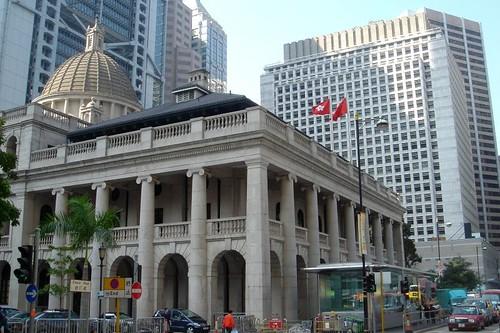
Tasmania's government image repositories contain thousands of duplicate photographs, the result of more than a decade of piecemeal digital asset management across agencies that rarely spoke to one another. The problem has now forced a coordinated replacement and audit program, with the Department of Premier and Cabinet confirming earlier this year that a whole-of-government digital asset review was underway.
The issue matters now because the state is spending heavily on tourism and infrastructure promotion. With Destination Tasmania running campaigns off the back of record visitor interest in places like Cradle Mountain and the Freycinet Peninsula, having corrupted, mislabelled or simply redundant images in the official libraries creates real practical headaches, wrong photographs appearing on tender documents, heritage listings, and public-facing websites.
How the Duplication Problem Grew
The origins trace back to the early 2010s, when individual agencies, from Parks and Wildlife Service to Heritage Tasmania and the Department of State Growth, each built their own image storage systems with no shared taxonomy. A photograph of Salamanca Place taken for one department's annual report would be uploaded again, re-cropped, and relabelled by another. The Libraries Tasmania digital collections, based at the Argyle Street building in Hobart's CBD, developed its own parallel archive that intersected only loosely with executive government holdings.
A 2019 internal audit, referenced in a tabled budget estimates document from that financial year, found that three major agencies shared fewer than 15 percent of their stored assets through any common platform. By then, storage costs across those agencies had grown substantially, though the exact combined figure was not made public. The audit recommended a unified digital asset management system, but no funding was allocated in the 2019-20 Budget for implementation.
The Marinus Link project added pressure from an unexpected direction. Communications teams working on the undersea cable proposal needed high-resolution coastal imagery of sites along the north-east Tasmanian coastline, including areas near St Helens and Binalong Bay. What they found when searching the government archive was a tangle of duplicated images filed under inconsistent location tags, some dated incorrectly by years. Campaign materials were delayed while staff manually sorted through holdings.
The Replacement Program and Where It Stands
The Liberal government allocated funding in the 2025-26 State Budget for digital transformation across several agencies, with a component directed at asset management infrastructure. The Tasmanian Archive and Heritage Office, which sits under the broader Libraries Tasmania umbrella, began working with the Department of Premier and Cabinet in the first quarter of 2026 to develop a replacement protocol, a process of identifying canonical versions of duplicated images, archiving superseded copies, and building a shared metadata standard.
The AFL stadium controversy, which has kept government communications teams under intense public scrutiny over cost blowout documents and planning imagery, has added urgency. Incorrect or inconsistently watermarked renderings circulating through government servers contributed to confusion during public consultation rounds held in late 2025 at venues including MyState Bank Arena in Hobart. Officials acknowledged the need for tighter image provenance tracking.
Parks and Wildlife Service, which maintains one of the most photographically rich archives in the state given its management of more than 45 percent of Tasmania's land area, is understood to be among the first agencies to pilot the new replacement workflow. Field photographers working out of regional offices in Queenstown and Launceston are now required to log images through a centralised intake portal rather than emailing files directly to communications staff.
For members of the public or journalists seeking images through right-to-information requests, the practical advice for now is straightforward: specify the date range and location in any request as precisely as possible. Requests that come in with vague parameters are far more likely to return duplicated or mismatched results while the audit is still in progress. The Tasmanian Archive and Heritage Office has indicated the first phase of the replacement program should be substantially complete by the end of the 2026 calendar year.