news
Hobart Takes On the Digital Dead-Weight Problem, Here's How It Stacks Up Against Global Rivals
Cities from Amsterdam to Auckland are purging duplicate images from public digital archives, and Hobart's approach is drawing cautious interest from archivists watching the field.
How we reported this
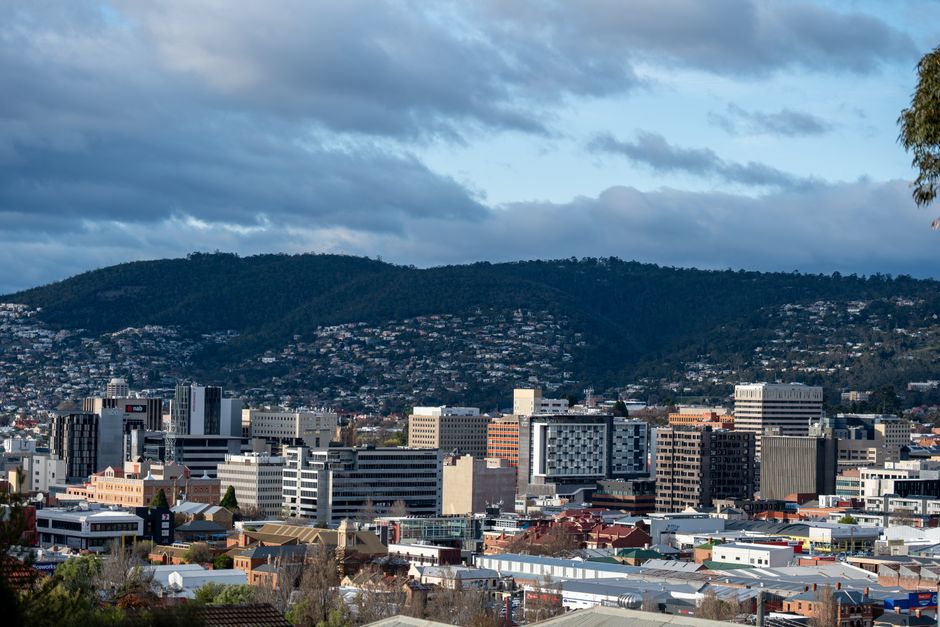
Hobart's civic digital archive holds tens of thousands of photographs, planning documents and heritage scans, and by the estimates of archivists working inside the system, a significant portion of that collection is made up of near-identical or outright duplicate images burning through server storage and slowing public access. The State Library and Archives Service of Tasmania, housed on 91 Murray Street in the CBD, began a formal deduplication audit in the first quarter of 2026, part of a broader digital infrastructure review commissioned under the Liberal government's broader records modernisation program.
Why now? The pressure is partly financial and partly reputational. Cloud storage costs for government agencies have climbed sharply since 2023, and with Tasmania's budget already under stress from the AFL stadium project at Macquarie Point, where cost estimates have moved well above the original figures discussed publicly, every line item in agency IT budgets is getting scrutiny. Internationally, the issue has been building for years. Archives New Zealand completed a major deduplication sweep of its DigitalNZ platform in 2024, reportedly freeing up enough storage to avoid a planned infrastructure spend. Dutch national archive Nationaal Archief began publishing its deduplication methodology openly in 2025 as a reference document for smaller institutions.
What Hobart Is Actually Doing
The State Library and Archives Service has been working with the University of Tasmania's School of Information and Communication Technology, based at the Sandy Bay campus, to develop a semi-automated flagging system. The system doesn't delete anything automatically, archivists still review every flagged pair before a decision is made. That cautious approach contrasts with methods used in some larger jurisdictions. The City of Amsterdam's digital collections team automated deletions directly from flagged batches in 2023, a move that drew criticism from heritage researchers who said contextually distinct images were lost because metadata was treated as the primary identifier rather than visual content.
Auckland Council took a middle path in late 2024, using automated flagging but requiring human sign-off on any image predating 1980. Hobart's current framework requires human review regardless of date, which archivists there argue is appropriate given the relatively small scale of the collection and the irreplaceable nature of much Tasmanian heritage material. The collection includes photographs of the Salamanca Market precinct going back to the early twentieth century and construction records from the Queen's Domain that exist in no other form.
The practical cost comparison is instructive. A 2025 report by the Australian Digital Alliance found that mid-sized government archives in Australia were paying between $18 and $34 per terabyte per month for cloud storage under standard government procurement agreements, with duplicate files in some collections accounting for between 15 and 40 per cent of total storage load. The State Library has not published its own specific figures, but the audit's scope, covering roughly 2.3 million digitised files, suggests the potential savings are not trivial.
The Risk Hiding in the Method
Not everyone in the archival community thinks speed is the goal. The Tasmanian Aboriginal Centre, which has worked with the State Library on the repatriation and management of cultural materials, has previously flagged concerns about automated systems misidentifying culturally significant images as duplicates based purely on visual similarity. That concern echoes debates playing out in New Zealand and Canada, where indigenous data sovereignty frameworks now require separate consultation pathways before any deletion from collections containing First Nations material.
The State Library's audit is expected to produce an interim report by September 2026, with any permanent deletions likely to begin no earlier than early 2027 pending a public comment period. For researchers and heritage professionals who rely on the collection, particularly those working through institutions like the Tasmanian Museum and Art Gallery on Davey Street, the message from archivists is to submit access requests now if there are specific photographic series they want confirmed as preserved. The window before the first deletions is real, and it is finite.