news
Tasmania's $3bn Stadium Gamble Strains Rockliff
Macquarie Point redevelopment and undersea cable costs spiral, forcing government to defend twin infrastructure bets.
How we reported this
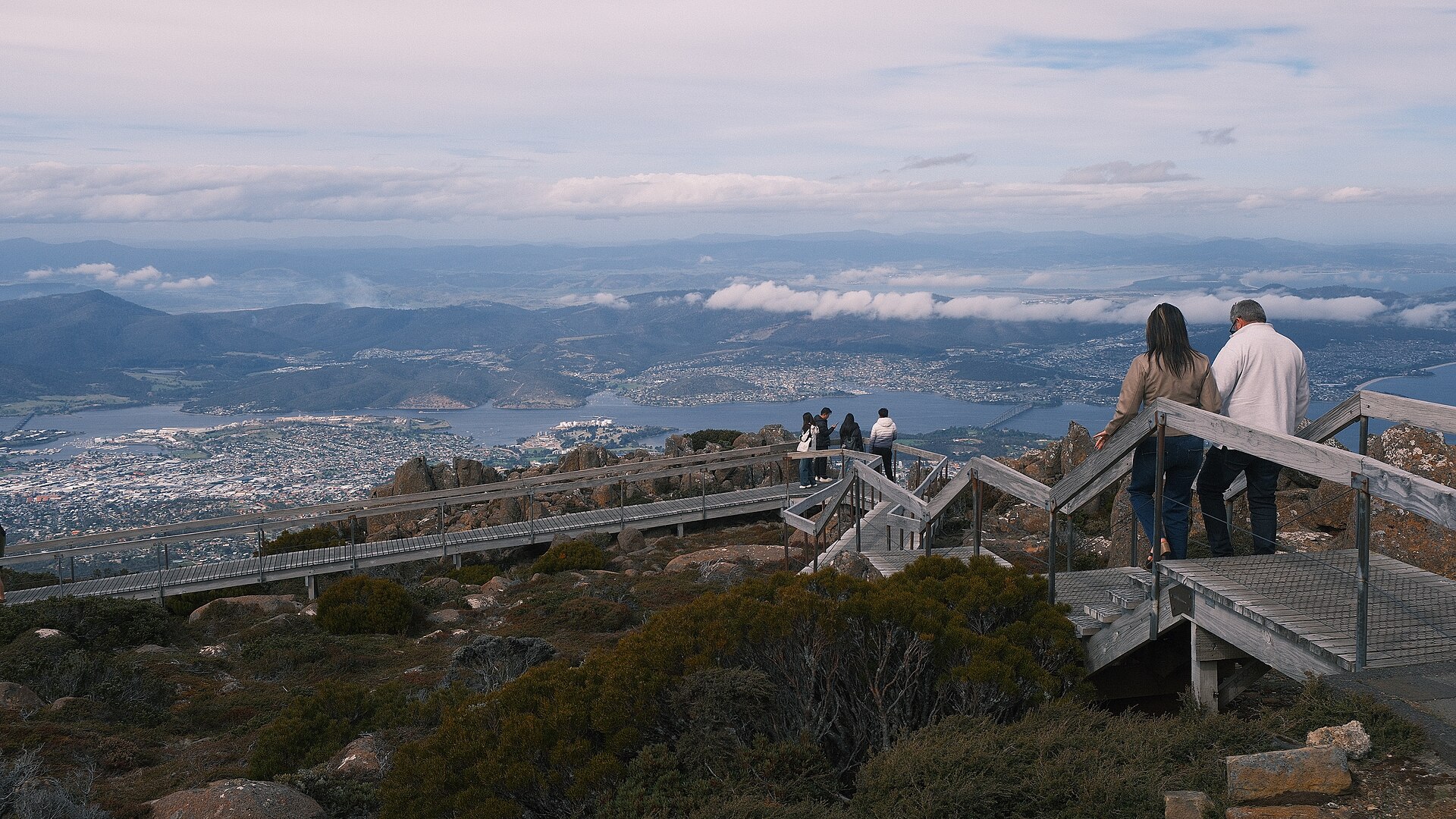
Tasmania's Liberal government is facing two slow-motion budget crises at once. The proposed AFL stadium at Macquarie Point in Hobart has blown past its original $750 million price estimate, while the Marinus Link undersea electricity cable, once pitched as the state's clean energy golden ticket, now carries a revised cost projection that infrastructure analysts say could top $3.8 billion before a single electron crosses Bass Strait. Both projects were born from genuine strategic logic. Both have become political anchors.
The timing matters because Sydney recorded its hottest June since 1859 this week, a data point that climate researchers say underscores the urgency of east-coast grid decarbonisation, the precise argument the Marinus Link's backers have always used. If the mainland needs Tasmania's hydro capacity as emergency renewable backup, the economic case for the cable is stronger. But so is the pressure on Tasmanians to explain why their taxpayers should carry a disproportionate share of the construction risk.
The Stadium: From Campaign Promise to Cost Blowout
The AFL facility at Macquarie Point did not appear from nowhere. The site, a former rail and industrial precinct on the fringe of Hobart's CBD, has been the subject of remediation and redevelopment proposals since at least 2013, when the Macquarie Point Development Corporation was established under state legislation. The stadium idea crystallised during negotiations over Tasmania's bid for an AFL licence, which the state finally secured in 2023 with the Devils entering the competition. A 23,000-seat roofed venue was written into the licence deed as a condition.
Early government costings placed the stadium at roughly $750 million, with the Commonwealth pledging $240 million and the state committing the remainder plus the land. But independent quantity surveyors engaged by the Tasmanian Infrastructure Advisory Council put the figure higher, some estimates now circulate between $900 million and $1.1 billion, depending on final design specifications for the roof structure and the carbon-neutral construction materials written into the planning brief. The Macquarie Point Development Corporation has not publicly confirmed a revised figure, and the project's design reference plans remain partially commercial-in-confidence. Hobart's North Hobart and Glenorchy communities, which currently host North Hobart Oval and UTAS Stadium respectively, are watching closely, given that a new city stadium would reshape Tasmania's football and events infrastructure for decades.
Marinus Link: The Cable That Keeps Getting Longer in Price
The Marinus Link is a 255-kilometre high-voltage direct-current cable proposed to run under Bass Strait from Heybridge, near Burnie on Tasmania's north-west coast, to Waratah Bay in Victoria. TasNetworks and its mainland counterpart AusNet are the project delivery partners. The Australian Energy Market Operator first flagged the link as nationally significant in its 2020 Integrated System Plan, and the federal government listed it as a priority transmission project under the Rewiring the Nation program.
The problem is the number. When Marinus was first costed publicly in 2021, the figure was approximately $3.1 billion for both cable circuits. By mid-2025, revised engineering assessments and supply chain inflation had pushed that toward $3.8 billion, with some industry modelling suggesting the final outturn cost could be higher still. The federal government has offered concessional financing, but the allocation of costs between Tasmanian consumers, mainland consumers and general revenue remains unresolved. A final investment decision was supposed to come in late 2025. It did not. Negotiations between Canberra and Hobart over the cost-sharing deed continued into the first half of 2026.
Tasmania's hydro system, managed by Hydro Tasmania from its Hobart headquarters on Elizabeth Street, holds roughly 12,000 gigawatt-hours of storage capacity in a good water year, equivalent to about 30 percent of Australia's total large-scale storage. That figure is the cornerstone of every argument for building the cable. Critics counter that climate variability has already reduced inflow reliability, pointing to the 2015-16 energy crisis when low lake levels forced Tasmania to run diesel generators on the Tamar Valley power station site and pay for emergency Bass Link imports.
What happens next will be determined largely by federal budget decisions expected in the September sitting fortnight and by whether the Macquarie Point master plan survives its current parliamentary scrutiny intact. The Tasmanian parliament's Public Accounts Committee has scheduled further hearings on the stadium financing model for later this month. If the cost-sharing formula for Marinus moves toward a higher Tasmanian consumer levy, expect that to collide loudly with the stadium debate inside the same budget papers.