news
How Tasmania's Public Image Archive Ended Up Full of Duplicates, and What It Cost to Fix It
A decade of siloed government departments, rushed digitisation grants and no shared naming convention quietly filled the state's official photo libraries with thousands of redundant files.
How we reported this
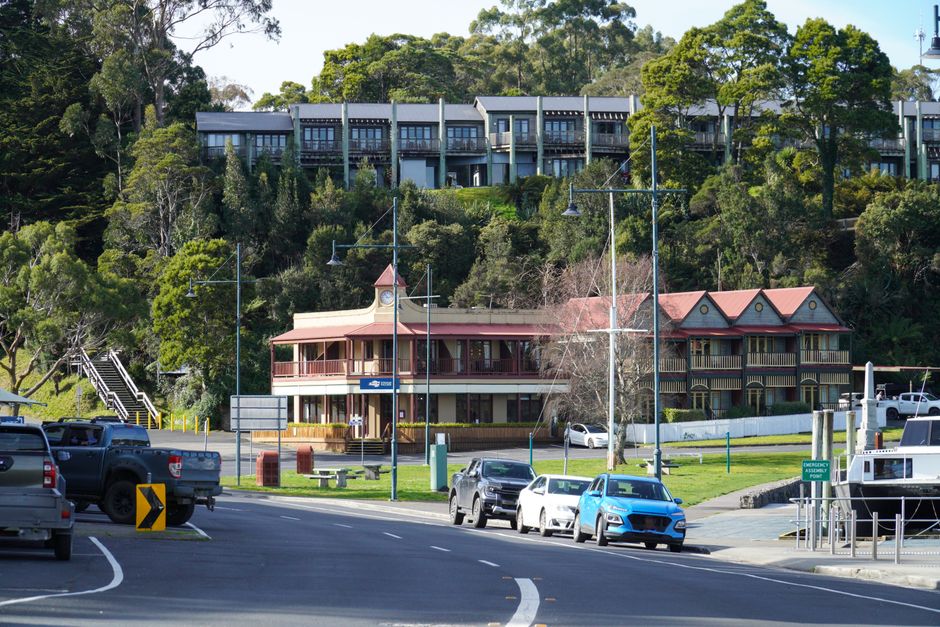
The problem had a mundane beginning. Sometime around 2016, three separate Tasmanian Government agencies, Tourism Tasmania, the Department of State Growth, and Parks and Wildlife Service, each commissioned independent photographic shoots of the same stretch of Wineglass Bay in the Freycinet National Park. Nobody told the others. The resulting image sets, stored in three different content management systems, were functionally identical. Multiply that across a decade and the scale of the duplication problem becomes clear.
The issue matters now because the Liberal government's digital asset consolidation project, initiated under the 2023 Digital Transformation Strategy, has reached the audit phase. Agencies across the state are being asked to migrate assets into a single platform, and the sheer volume of duplicate images is slowing the process and inflating storage costs that ultimately fall on Tasmanian taxpayers.
How the Duplication Built Up Over Time
The roots go back to the early 2010s, when the federal government's National Broadband Network rollout prompted a wave of state-level digitisation grants. Tasmanian councils, tourism bodies and cultural institutions received funding to scan physical archives and photograph assets, but the grants came with few technical standards. The Tasmanian Archive and Heritage Office on Davey Street in Hobart ingested material under one metadata schema; the Library at the State Library of Tasmania on 91 Murray Street used another; individual councils in Launceston, Devonport and Burnie built their own local repositories with no obligation to cross-reference state holdings.
Photography procurement compounded the problem. When campaigns changed, and in a decade of tourism marketing, they changed frequently, new image libraries were commissioned rather than licensed from existing ones. Each agency treated storage as essentially free, because cloud costs were bundled into whole-of-government IT contracts and never surfaced as a line item that department heads could see. The incentive to check whether a usable image already existed simply wasn't there.
Government Technology Services, the central ICT unit within the Department of Premier and Cabinet, flagged the duplication issue formally in a 2022 internal review. That review, tabled at a bureaucratic level rather than released publicly, reportedly identified tens of thousands of image files across state systems that shared visual content but carried different file names, different metadata and different rights licensing, meaning the same photograph could simultaneously be marked as free for reuse in one system and rights-restricted in another.
The Mechanics of Replacement and What Comes Next
Duplicate image replacement, the process of identifying redundant files, selecting a canonical version, updating all database references to point to that version, and deleting the rest, sounds straightforward. In practice, it requires a combination of perceptual hashing software and manual curatorial review, particularly for images where cropping, colour grading or watermarking creates files that are functionally the same photograph but technically distinct. For a state agency holding legacy TIFF scans alongside modern JPEGs of the same subject, the process can be labour-intensive.
The Tasmanian e-Health record system migration in 2019 offered a cautionary precedent: a project initially scoped at roughly $11 million ran significantly over time and budget in part because data hygiene problems, including duplicate patient records, weren't fully quantified before work began. Digital asset libraries present analogous risks when the scope of duplication isn't established upfront.
Agencies currently working through the migration have been advised to prioritise images used in external-facing material, including the tourism content that sits at the core of the state's economic pitch, before tackling internal records. Tourism Tasmania's Salamanca Place offices have been coordinating with the broader whole-of-government project since late 2025.
For Tasmanians, the practical outcome of getting this right is modest but real: a unified, searchable image library means journalists, researchers, community groups and other agencies can find and reuse publicly funded photography without duplicating procurement costs. The state spends substantially on commissioned photography each year. Reducing redundancy in that spend, even marginally, frees resources for other priorities. The audit phase is expected to conclude before the end of the 2026 calendar year, at which point the government will need to decide whether to resource a full remediation project or live with the sprawl a little longer.