news
How Tasmania's Public Image Archive Ended Up Full of Duplicates, and What's Being Done About It
A slow accumulation of copied, re-uploaded and mis-catalogued photographs has quietly undermined the state's digital heritage collections, and fixing it is proving harder than anyone expected.
How we reported this
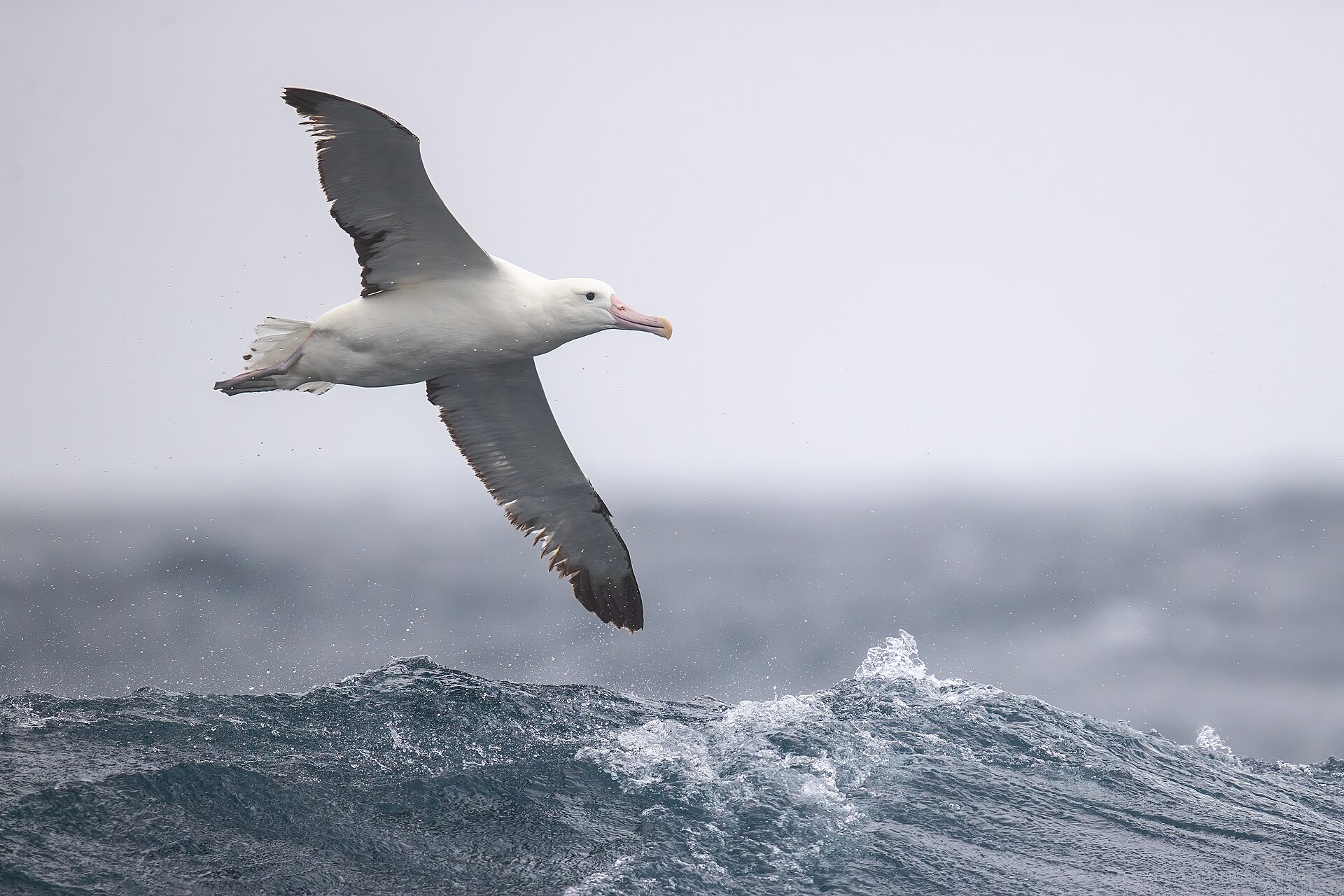
Tasmania's publicly funded digital image collections contain thousands of duplicate photographs, some appearing four or five times under different file names and catalogue numbers, a problem that archivists and records managers say has been building since at least 2008, when the first major digitisation push began under the then-Department of Primary Industries, Parks, Water and Environment.
The issue matters now because the state government is mid-way through a $4.2 million upgrade to the Libraries Tasmania digital infrastructure, centred on the heritage reading room at the Princes Street facility in Hobart's CBD. That project, scheduled for completion by March 2027, depends on a clean, non-redundant image database. Duplicates inflate storage costs, corrupt search results, and, in collections tied to Aboriginal heritage documentation, can create legally sensitive misattributions that complicate land return negotiations under the Aboriginal Lands Act.
A Problem That Grew With Every Migration
The duplication problem did not happen overnight. Libraries Tasmania, which administers the state's photographic and archival holdings from its Campbell Street building, has migrated its digital assets across at least three separate content management systems since the early 2000s. Each migration carried forward orphaned files and failed to reconcile records already held under variant metadata. The Tasmanian Archive and Heritage Office, which operates as a division within Libraries Tasmania, flagged the scale of the overlap in an internal review completed in late 2023, though the findings were not widely publicised.
Regional collections compounded the difficulty. The Launceston branch on Civic Square holds a separate photographic archive built partly from donated community material, including images transferred from the now-closed Examiner newspaper library. When those files were ingested into the centralised statewide system, automated de-duplication tools failed to catch files that had been re-scanned at different resolutions or renamed during the newspaper's own internal archiving process. Estimates cited in sector discussions suggest somewhere between 12 and 18 per cent of the combined digital holdings may contain at least one duplicate, though Libraries Tasmania has not confirmed a precise figure publicly.
The AFL stadium controversy provided an unintentional illustration of the wider problem. Promotional and planning images connected to the proposed Macquarie Point stadium site in Hobart circulated in multiple versions across government communications platforms throughout 2024 and 2025, with slightly different cropping or colour correction applied each time they were re-uploaded. By the time a Senate estimates process examined stadium-related expenditure in early 2025, departmental staff were unable to immediately confirm which images were original and which were derivatives, a small but telling symptom of a broader cataloguing culture that had never treated duplication as a priority issue.
The Technical and Political Path Forward
The current remediation effort is being led through a working group that includes Libraries Tasmania staff, the Office of the Chief Information Officer, and contractors engaged under a panel arrangement established by the Department of State Growth. The process involves perceptual hashing, a technique that identifies visually similar images even when file names and metadata differ, combined with manual review for items flagged as heritage-sensitive.
That manual review is slow. The Tasmanian collection spans roughly 1.4 million digitised items, and staff resources at both the Hobart and Launceston branches are limited. The Libraries Tasmania annual report for 2024-25 recorded 34 full-time equivalent staff across all digitisation and cataloguing functions statewide, a number that has not grown in proportion to the volume of material being ingested.
Practical consequences for members of the public are real. Researchers using the Tasmanian Names Index or the broader catalogue via the Libraries Tasmania website may retrieve the same image multiple times in a single search, with conflicting date or location attributions attached. For genealogists, local historians, and journalists cross-checking archival material, that inconsistency erodes trust in the collection as a whole.
The working group is expected to present a remediation roadmap to the Department of Natural Resources and Environment Tasmania before the end of the 2026 calendar year. If the perceptual hashing pass is completed on schedule, a public-facing version of the cleaned catalogue could be accessible through the Libraries Tasmania portal as early as mid-2027, though the infrastructure upgrade timeline will need to hold for that date to remain realistic.