property
Tasmanian Vendors Are Waiting Longer and Cutting Deeper to Get a Deal Done
Days on market are stretching and discounting rates are climbing across the state, signalling a market where buyers have recovered their negotiating power.
How we reported this
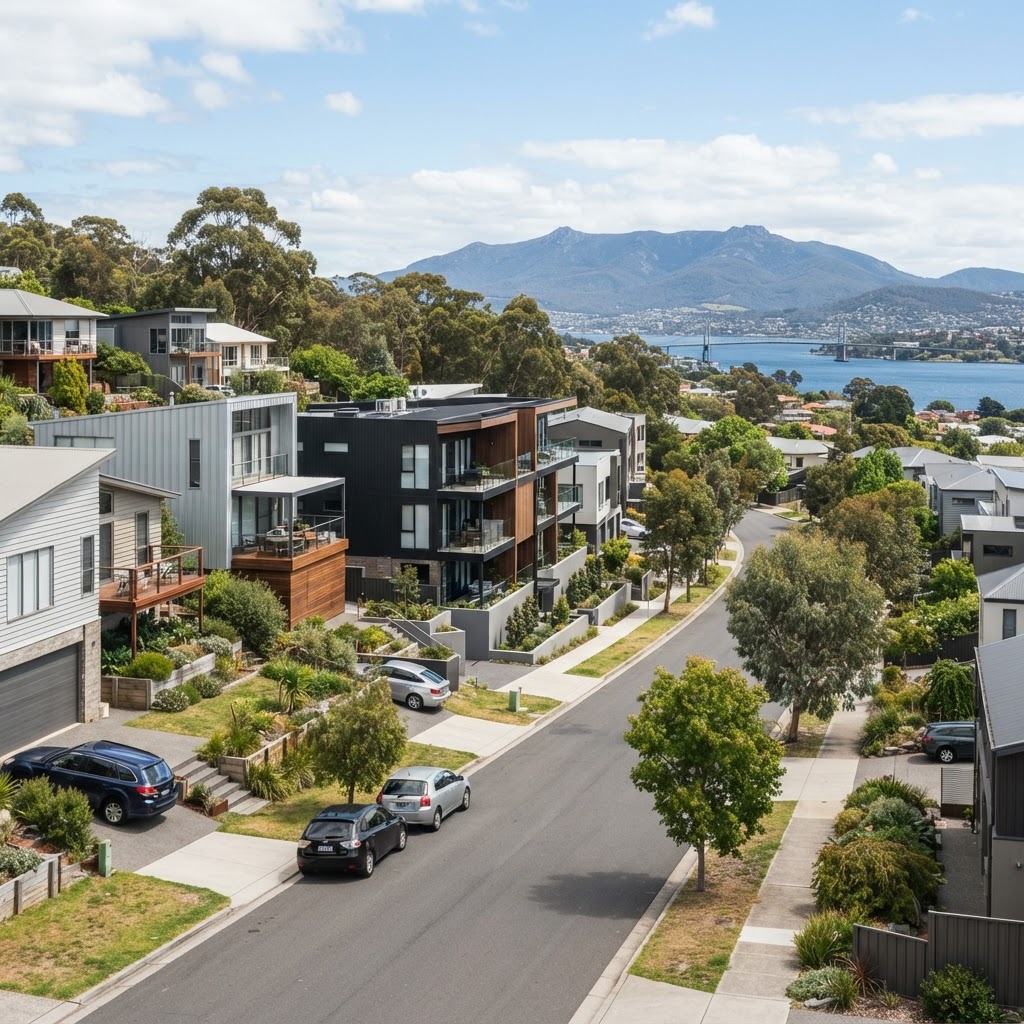
Sellers across Tasmania are sitting on their listings longer and shaving more off their asking prices than at any point in the past three years. Days on market for residential properties in Greater Hobart have blown out to around 45 days at the median, up from roughly 28 days in the same winter period of 2024, while vendor discounting, the gap between the original list price and the final sale price, has edged toward four to five percent in some suburban corridors.
That shift matters now because it breaks a narrative that has persisted since the pandemic-era rush, when properties in suburbs like West Hobart and Moonah were routinely going under offer within a week, sometimes above the advertised price. That era is over. The question facing sellers listing this winter is how much room they have to move, and whether buyers are ready to catch what falls.
The Gap Between Hope and Reality
The pressure is clearest at the top end of the market. Sandy Bay and Battery Point, where the state median of around $560,000 looks almost quaint against street-level prices regularly north of $900,000, have seen a clutch of prestige properties quietly repriced after sitting unsold through autumn. Several homes along the Esplanade corridor in Sandy Bay spent more than 60 days on the platform before vendors accepted revised terms. In Battery Point, the compressed stock that once made a Cromwell Street or Colville Street terrace feel like a lottery ticket has loosened enough that buyers are commissioning building inspections and sleeping on it, behaviour that would have seemed reckless 18 months ago.
Launceston is a different calculation. The city has absorbed a steady stream of buyers priced out of Hobart or drawn by the liveability pitch, the Cataract Gorge, the North Esk riverside renewal, the relative proximity to the airport for fly-in-fly-out workers. Days on market in suburbs like Newstead and Invermay are still tracking below the state average, sitting closer to 35 days, and discounting there remains comparatively modest at around two to three percent. Agents working the Brisbane Street and Charles Street precinct commercial strip have noted, anecdotally, at least, that residential demand connected to the University of Tasmania's northern campus continues to underpin the inner ring.
What the Numbers Tell Buyers and Sellers
PropTrack data published in June 2026 placed Tasmania among the states recording the most significant year-on-year increase in median days on market, a trend consistent with the broader national pattern of slowing clearance rates. Melbourne's auction market hit a record-poor start to its winter season, a signal that demand softness is not a uniquely Tasmanian problem, though the island's dynamics have their own texture given the outsized role lifestyle migration played in driving prices up through 2020 to 2023.
For vendors, the practical implication is pricing discipline at the point of listing. Properties entering the market overcooked, tested at $50,000 or $70,000 above what comparable recent sales support, are the ones racking up the days and enduring the price cuts. Real Estate Institute of Tasmania figures have previously shown that homes which require a price reduction take, on average, nearly twice as long to sell as those priced correctly from day one. A property in Lenah Valley or Glenorchy that is clearly and honestly priced still moves; one carrying vendor optimism tends to stagnate.
For buyers, particularly the Gen Z cohort that research consistently shows still wants to own despite affordability headwinds, a market with 45-day average listings and visible discounting is one where conditional offers, subject-to-finance clauses, and negotiated settlement periods are back on the table. That is a meaningful shift. The practical advice from any experienced buyer's advocate is simple: watch the price history tab, count the days, and understand that a vendor on day 50 is a different negotiating partner than one on day five. Tasmania's market is not broken, it is recalibrating, and the gap between original asking price and final sale is the clearest measure of exactly how far that recalibration has run.
This article is general information only and is not personal financial or investment advice. Consider your own circumstances and seek licensed professional advice before making financial decisions.